Azores archipelago receives “Hope Spot” rating for ocean conservation

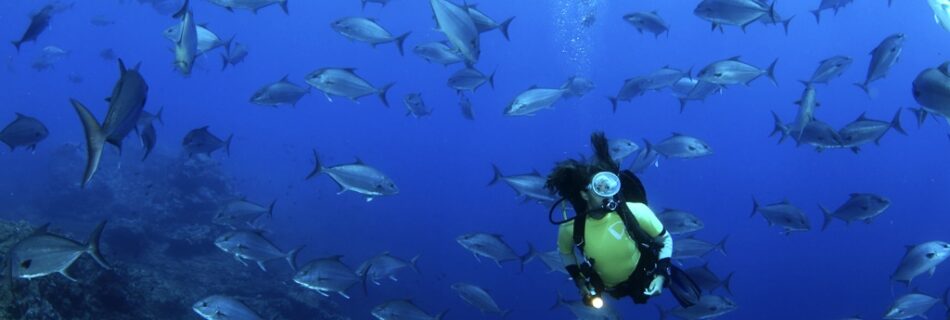
The Regional Secretary of the Sea, Science and Technology stated that “it is a very important recognition that the Region is considered a ‘Hope Spot’ or a place of hope in the project of biologist Sylvia Earle, known worldwide”, stressing, in this sense, “ the work of several researchers from the Okeanos Research Center and the Azores Sea Observatory, with the involvement of the Regional Government. ” Gui Menezes was speaking this afternoon in Horta during the press conference announcing the Azores ‘Hope Spot’ rating of the Mission Blue Foundation – Sylvia Earle Alliance. According to Gui Menezes, the issue is the appointment “not of a small portion of the Azores Sea, but of the entire maritime territory” of the archipelago. Hope Spots are places considered critical to ocean health, and through this project are selected locations around the world whose communities are supported in promoting actions aimed at protecting the oceans. “It is often citizens and communities who propose certain ‘places of hope’ for the sustainable management of the oceans and for the defense of biodiversity,” said the Regional Secretary. According to the official, this is “a way to motivate and raise citizens’ attention to the importance of the oceans in our lives and the need to protect them”. Gui Menezes argued that the Azores “are, in fact, a special site that maintains some integrity in terms of biodiversity, and are also a unique site in terms of scientific discovery potential and deep sea knowledge”. “This is another source of pride, and we should enjoy the notoriety of the Azores in this area,” he said. The Regional Secretary stressed that “the next two years will be decisive for the Azores in the sea area”, stressing that the Azorean Executive is preparing management plans for marine protected areas, “which are currently undergoing a review work ”and the Maritime Spatial Planning Plan is also being prepared. According to Gui Menezes, this work “will be very important for the issues of sea management, the reconciliation of the various uses we make of the sea, and also for the issues of biodiversity conservation.” “We need to be cautious so we don’t make mistakes that others have already made,” he said. The official also highlighted the project ‘Blue Azores’, in partnership with the Blue Ocean Foundation and the Waitt Foundation & Institute, whose memorandum of understanding was signed in February this year, where a commitment was made in the coming years to 15% of the project. Azores Sea to be protected areas. “This is a very relevant project not only for the Azores, but for the country and the world,” he said, stressing the importance of involving schools and younger generations in ocean literacy issues. In this sense, under the ‘Blue Azores’, the Educate for a Blue Generation program focusing on conservation and sustainable use of marine resources is being implemented in the Region, with the support of the Azorean Executive. The program allows to address, in school context, eight fundamental areas of knowledge about the ocean, across several subjects such as literature, ecology, law, strategy, geography, economics, history, physics and chemistry, and answers questions posed by children, like ‘Why is the ocean important?’, ‘Who owns the ocean?’ or ‘Why is the Azores Sea special?’ “We can be an example and a strong motivation to pursue the objectives of ocean conservation,” says the Regional Secretary. American biologist Sylvia Earle, who they have already called “Jane Goodall of the Oceans”, was in Horta on the occasion of the annual meeting of her project “Mission Blue Foundation – Sylvia Earle Alliance”.
awards-espirito-verde

“Espírito Verde” awards distinguish good environmental practices

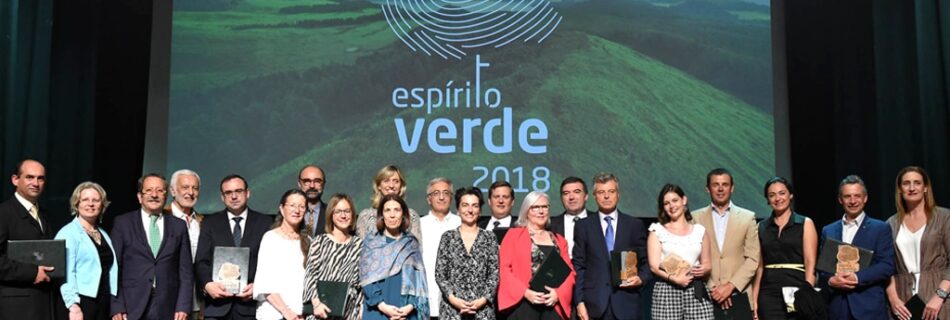
Azorean Government has rewarded citizens and institutions that stand out for their good environmental practices. The Government of the Azores, through the Regional Secretariat for Energy, Environment and Tourism, has awarded five “Espírito Verde” awards and seven honorable mentions, marking World Environment Day, under the motto “Good examples are to follow … And to be to recognize!”. “These awards are aimed at companies, institutions and personalities distinguished by good environmental practices as well as environmental research, activism, volunteering or patronage,” said the Regional Secretary at the awards ceremony, which took place on Wednesday in Horta. For the holder of the Environment department, it is a way of “highlighting the role of citizens as an active and determining part of the sustainable development of the Azores”. The”Espírito Verde” awards embody an understanding that any practice or activity oriented towards a balanced and sustainable relationship between Man and Nature must be identified, recognized and shared,” he said.

life-azoresnatura

LIFE AZORES NATURA project on the right track

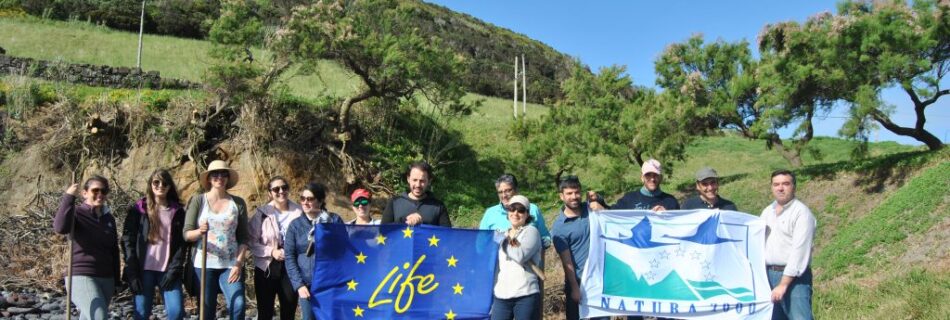
The Regional Director for the Environment underlined the ongoing work under the LIFE AZORES NATURA project, at a meeting where actions were foreseen for the near future, and noted the “good development of the project, in line with the commitments and schedule set out”. Hernâni Jorge stressed the importance of “giving visibility to the largest and most comprehensive nature conservation project ever designed for the Azores”, underlining its relevance “for the conservation of protected species and habitats in terrestrial, coastal and marine ecosystems of all the Azores Islands ”. The Regional Director was speaking on the sidelines of a project management meeting involving all beneficiaries, including the Regional Directorates for Environment and Sea Affairs, Azorina, SPEA and the La Palma Biosphere Reserve. The LIFE AZORES NATURA project, which covers 23 Special Conservation Areas, 15 Special Protection Areas and three Natura 2000 Sites of Community Interest, has a duration of nine years and a total budget of 19.1 million euros. “This is a project that covers most Natura 2000 sites in the Azores, seeking to make a significant contribution to the conservation of species and habitats protected by the Birds and Habitats Directives in terrestrial and marine ecosystems of all islands in the archipelago,” he said. Hernani Jorge. “LIFE Azores Natura’s strategy and project work is based on a strong institutional partnership that will actively contribute to these objectives, involving a range of entities with distinct natures and complementary technical capabilities, enabling the project to benefit from a solid and valuable technical, political and operational knowledge, thus ensuring the continuation of the actions after the end of the action, ”he added. The Regional Director stressed that this is another measure that proves the growing investment of the Government of the Azores in nature conservation, consolidating the natural heritage as one of the main assets of the Region.

life-vidalia

LIFE VIDALIA kicks off with various actions targeting Azorina and Lotus species

Nature conservation project LIFE VIDALIA kicks off with several actions targeting two endemic species The Regional Secretariat for Energy, Environment and Tourism, through the Regional Environment Directorate, carried out, between February and March, several actions under the LIFE VIDALIA – Valorization and Innovation project, targeting the endemic species “Azorina” and “Lotus”, in all the islands covered by this project.     LIFE VIDALIA aims to conserve these two endemic Azorean species, protected by the Habitats Directive, on the Faial, Pico and São Jorge islands. In total there will be 17 intervention areas, 12 of which will be directed to “Vidália”, a species of the only endemic genus of the Azores, and five to “Lotus azoricus”, an endemic species, totaling an area of ​​about 95 hectares. The first sequence of conservation work is the removal and control of invasive alien plant species in the intervention areas where the “Vidália” populations of Morro de Castelo Branco, in Faial Island, and Fajã dos Cubres, in São Jorge, and the population of “Lotus azoricus” from Calheta do Nesquim, on the island of Pico, in order to prepare the areas for future endemic species reinforcement plantations. This five-year project, with an investment of € 1.8 million, will also have other very important components in a strategy for sustainable development, the promotion of nature conservation habits, including specific environmental education and awareness programs of environmental volunteering. At the same time, the sowing of plants that will be used to recover the habitats of the intervention areas has already started. Since the project was approved in July 2018, the Regional Directorate for the Environment and Azorina – Society for Environmental Management and Nature Conservation, beneficiaries of the project, have carried out a series of actions involving the reevaluation of the intervention areas, the harvesting of seeds of the target species, the definition of the operational plan and the acquisition of the necessary materials for the project implementation. LIFE VIDALIA conducts conservation work in all sites of the Natura 2000 network of Faial, Pico and São Jorge islands where “Vidália” and “Lotus azoricus” occur.